







When winter arrives, most gardens take a long nap—but not all of them. Some flowers dare to bloom when the world turns frosty, adding bursts of color and hope to the coldest days. These winter bloomers remind us that beauty doesn’t hibernate—it simply adapts.
Whether you’re just learning to care for plants or already have soil under your nails, these four flowers will turn your winter garden (or balcony) into a lively scene of color and charm.
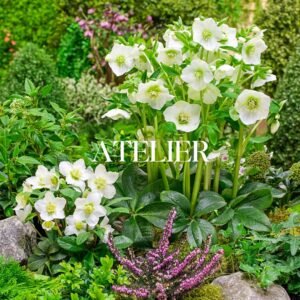
Hellebores (The Christmas Rose)
There’s something quietly magical about hellebores. They bloom when most plants are hiding from the cold—usually between December and March. Their petals come in shades of ivory, blush pink, plum, and green, adding a soft elegance to any space.
Care Tip: Plant hellebores in well-drained soil and partial shade. They don’t enjoy soggy roots, so make sure the soil stays moist but never muddy. Add mulch in late fall to insulate them through cold snaps.
ATELIER Note: These beauties are also deer-resistant—making them as tough as they are graceful.
Camellias (The Evergreen Queen)
Camellias are the divas of the winter garden—graceful, glossy, and impossible to ignore. Their lush blooms, which can appear from November to March, resemble roses and come in a range of reds, whites, and pinks.
Care Tip: These evergreens thrive in slightly acidic soil and prefer morning sun or light shade. Keep the soil evenly moist, and cover them on freezing nights to protect their buds.
ATELIER Note: In Japan, camellias represent admiration and love—an elegant symbol of devotion blooming in the chill of winter.
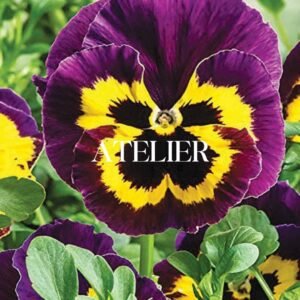
Pansies (The Cheerful Champs)
If you want instant joy in your garden, plant pansies. These little bursts of color are hardy enough to handle frost and often bounce back even after freezing temperatures. Their “faces” add a playful charm to planters, borders, and window boxes.
Care Tip: Pansies love sunlight and need regular deadheading (removing faded blooms) to keep producing new flowers. In colder climates, a bit of mulch or a cozy corner near your home will help them thrive all season long.
ATELIER Note: Don’t give up if they wilt after a frost—pansies are natural comeback artists.
Witch Hazel (The Enchanted Shrub)
Witch hazel is winter’s most unexpected star. This hardy shrub sends out bright yellow, orange, or red blooms that look like ribbons dancing on bare branches. Even better—it has a spicy, citrusy fragrance that perfumes the crisp air.
Care Tip: Plant witch hazel in a sunny or partly shaded spot with rich, well-drained soil. It doesn’t need much pruning—just remove any dead wood after flowering. Water occasionally during dry spells, even in winter.
ATELIER Note: Its name comes from its centuries-old use in natural medicine, but in the garden, witch hazel’s magic is purely visual.
Winter gardening isn’t about fighting the cold—it’s about finding beauty within it. With hellebores, camellias, pansies, and witch hazel, you can transform gray winter days into something vibrant and alive.
Whether you’re tending a city balcony or a sprawling backyard, let these blooms remind you that elegance endures—even under a blanket of frost.
